
 English

Sacred Rath Yatra Chariots Take Shape

Sacred Chariots for Puri Rath Yatra Completed with Divine Precision and Traditional Craftsmanship
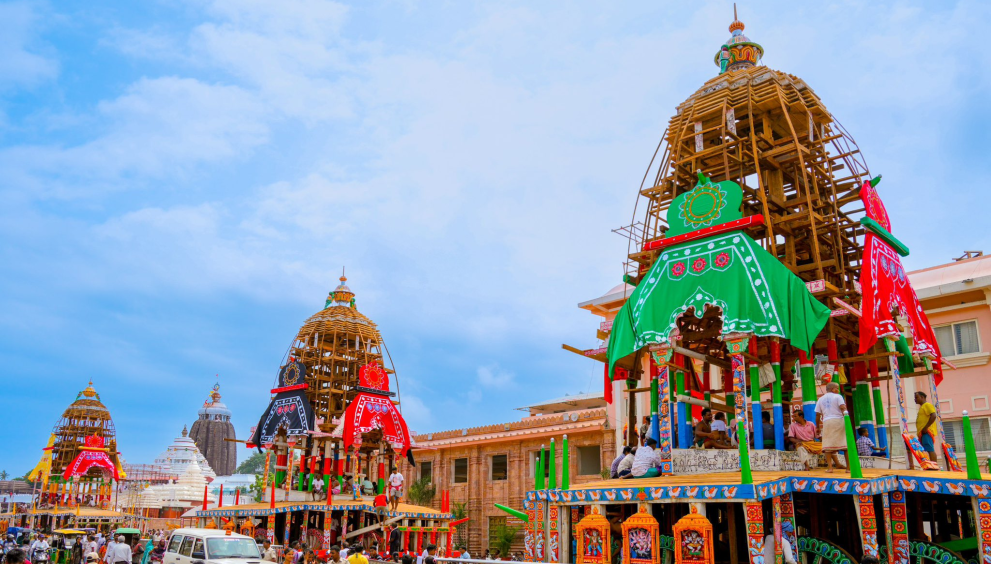
Puri, June 25 : The three grand chariots for the upcoming Puri Rath Yatra—Nandighosh, Taladhwaja, and Darpadalana—have been meticulously crafted in a spiritually significant and time-bound process steeped in tradition, ahead of the festival scheduled to begin on June 27.
Constructed for the presiding deities of the Shri Jagannath Temple—Lord Jagannath, Lord Balabhadra, and Devi Subhadra—the chariots represent more than architectural marvels; they are sacred vessels prepared with devotion, precision, and adherence to centuries-old customs.
The construction began on Akshaya Tritiya, a highly auspicious day, when the Ajnamallyas (divine orders) were ceremonially handed over by temple priests to the Biswakarmas, the master carpenters entrusted with this divine responsibility. The temple administration also offered turbans to the three chief carpenters, symbolizing the sacred duty bestowed upon them.
Approximately 100 skilled traditional carpenters worked daily at the Ratha Khala (construction yard), under the close supervision of three senior Biswakarmas. They followed a tightly scheduled plan to complete the chariots within 50–55 days, even doubling shifts when delayed by monsoon rains or cyclonic disturbances.
The chariots, crafted using 872 specially selected pieces of seasoned timber from species such as Asan, Dhaura, and Phasi, adhere to precise measurements and sacred design blueprints:
- Nandighosh (Lord Jagannath): 13.9 meters tall, 16 wheels
- Taladhwaja (Lord Balabhadra): 13.5 meters tall, 14 wheels
- Darpadalana (Devi Subhadra): 12.9 meters tall, 12 wheels
Every part—from axles to wheels—is made from specific wood types, and the structural integrity is reinforced using over two tonnes of nails, iron clamps, and hooks, all fixed by traditional blacksmiths.
Adding divine artistry, a group of Roopakaras (sculptors and painters) carves and paints the guardian deities (Parswadevatas) on each side of the chariots. Meanwhile, Dorjees (traditional tailors) drape the massive structures in designated coloured fabrics that symbolize each deity.
Before the deities ascend their chariots, a sacred Homa (fire ritual) is performed by temple purohits to sanctify them. In keeping with tradition, the completed chariots are moved under cover of darkness to the Simhadwar (Lions’ Gate) of the temple, facing east toward their destination—the Gundicha Temple, the deities’ maternal home.
This annual spiritual and architectural feat is not only a testament to Odisha’s rich cultural legacy but also a symbol of the unwavering devotion of its people, as they prepare to celebrate one of the most revered festivals in India—the Rath Yatra of Lord Jagannath.

