English


Pakistan Suspends Agreements, Takes Tough Stance

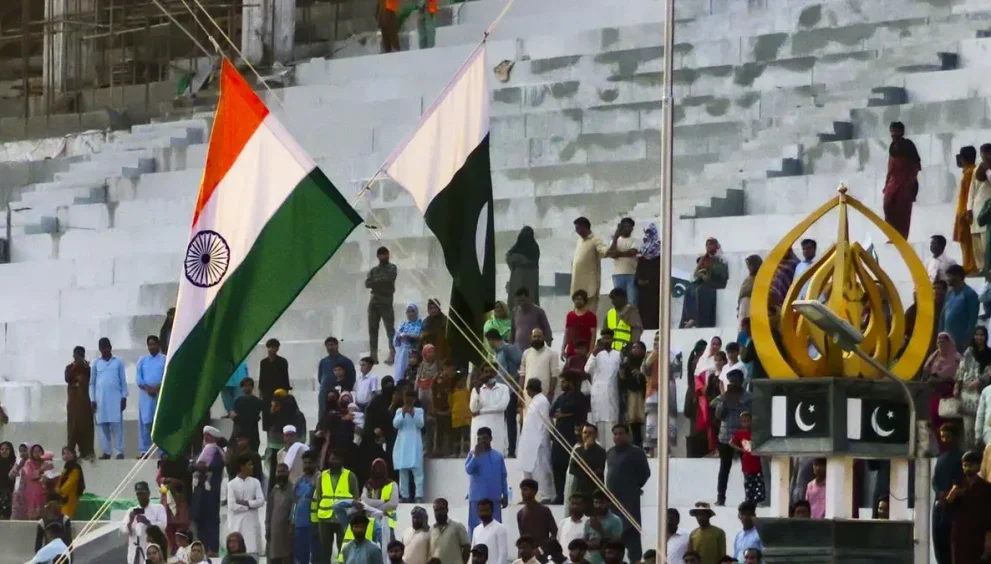
Pakistan Suspends Bilateral Agreements, Takes Tough Stance After Pahalgam Attack
Pakistan on Thursday took a series of retaliatory measures against India, escalating tensions following the Pahalgam terror attack. The Pakistani government announced that it would put the Simla Agreement and all other bilateral accords with India on hold, while also suspending all trade between the two countries. In a significant move, Pakistan closed its airspace to Indian airlines and declared that any attempt to divert water from the Indus River, as per the Indus Water Treaty, would be considered an act of war.
The decisions came after a high-level meeting of Pakistan’s National Security Committee chaired by Prime Minister Shehbaz Sharif, in response to India’s actions, which included suspending the Indus Water Treaty and downgrading diplomatic ties with Islamabad in retaliation for the terror attack in Pahalgam.
In addition to these steps, Pakistan took further diplomatic actions, including the closure of the Wagah border post and the cancellation of visas granted to Indians under the SAARC Visa Exemption Scheme (SVES). Pakistan also ordered the military advisers at the Indian High Commission to leave, echoing India’s move on Wednesday to expel Pakistani officials in response to the attack.
The Pakistani government’s stance on the Indus Water Treaty was particularly pointed. Pakistan’s leadership warned that any move by India to divert water under the treaty would be met with serious repercussions, raising the stakes in an already fragile diplomatic situation.
The latest developments follow the Pahalgam attack on April 22, in which a tribal villager was killed during a protest against Indian infrastructure projects in Jammu and Kashmir. The attack has significantly strained bilateral relations, and both countries have been locked in a war of words over the incident, with each side accusing the other of complicity in supporting terrorism or destabilizing the region.
Pakistan’s actions mark a sharp escalation in tensions, with both sides taking tough measures in a highly charged geopolitical environment. The future of the Simla Agreement, a landmark 1972 accord that has governed India-Pakistan relations for decades, remains uncertain as both nations face growing diplomatic challenges.
As tensions rise, international observers are closely monitoring the situation, hoping for de-escalation but fearing further strain on the already fragile peace process between the two nuclear-armed neighbors.