English
ISRO Expands Student Participation In Space

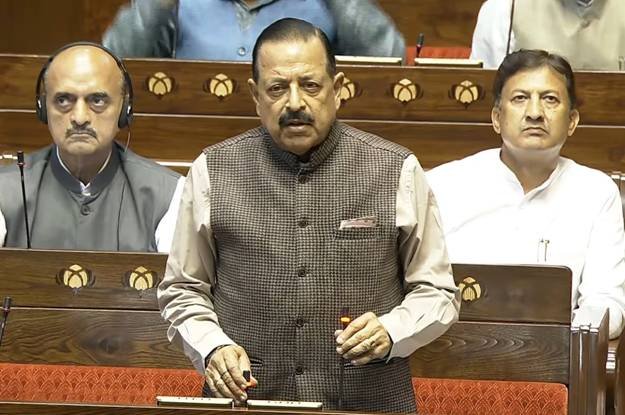
Indian Space Research Organisation is expanding student participation in space missions through a range of structured initiatives that allow young researchers to design satellites, develop payloads and gain hands-on experience in space technology, Union Minister Jitendra Singh informed the Rajya Sabha on Thursday.
Replying to a question in the House, Singh said the government is committed to democratising access to space technology by providing opportunities for students from institutions across the country, including those in tier-2 and tier-3 cities, to participate in India’s growing space ecosystem.
Under ISRO’s Student Satellite Programme, led by the U R Rao Satellite Centre, academic institutions and student teams are encouraged to design and build satellites with technical mentoring from ISRO scientists. These student-built satellites are also provided integration support and launch opportunities through ISRO missions.
The minister said that 17 student satellites and payloads have been authorised so far, out of which 11 have already been successfully launched. Institutions involved in these missions include the Indian Institute of Space Science and Technology, Indian Institute of Astrophysics, RV College of Engineering, MIT World Peace University, Amity University Maharashtra and Assam Don Bosco University, among others.
Singh highlighted the role of Indian National Space Promotion and Authorisation Centre (IN-SPACe) in promoting student engagement through competitions focused on designing CAN-sized satellites and model rockets. Nearly 97 student teams comprising around 850 students have participated in these competitions.
To further strengthen academic participation, Space Technology Incubation Centres (STICs) have been established across the country to facilitate collaborative research between universities and ISRO scientists. These centres help students develop indigenous space technologies with expert mentorship.
The minister also said that internship and project trainee programmes are available for undergraduate, postgraduate and doctoral students from recognised institutions, enabling them to gain hands-on research exposure at ISRO centres.
Highlighting the growing enthusiasm among students, Singh noted that the Model Rocketry and CanSat India Student Competition was organised in October 2025 at Kushinagar by IN-SPACe, ISRO and the Astronautical Society of India. The event saw 67 teams and nearly 500 students design and launch model rockets carrying CanSat payloads up to an altitude of about one kilometre.
The government has also earmarked around ₹10 crore annually for student-focused educational outreach activities in space science and technology.
According to Singh, these initiatives align with the goals of the Indian Space Policy 2023, which aims to build a vibrant and inclusive space ecosystem by encouraging participation from students, startups, academic institutions and industry in India’s expanding role in the global space sector.