
India, China Reach Eight-Point Roadmap to Strengthen LAC Border Management
New Delhi, Aug 26: India and China have agreed on an eight-point roadmap aimed at maintaining peace and tranquillity along the Line of Actual Control (LAC), strengthening border management mechanisms and advancing negotiations towards a settlement of the long-standing boundary question.
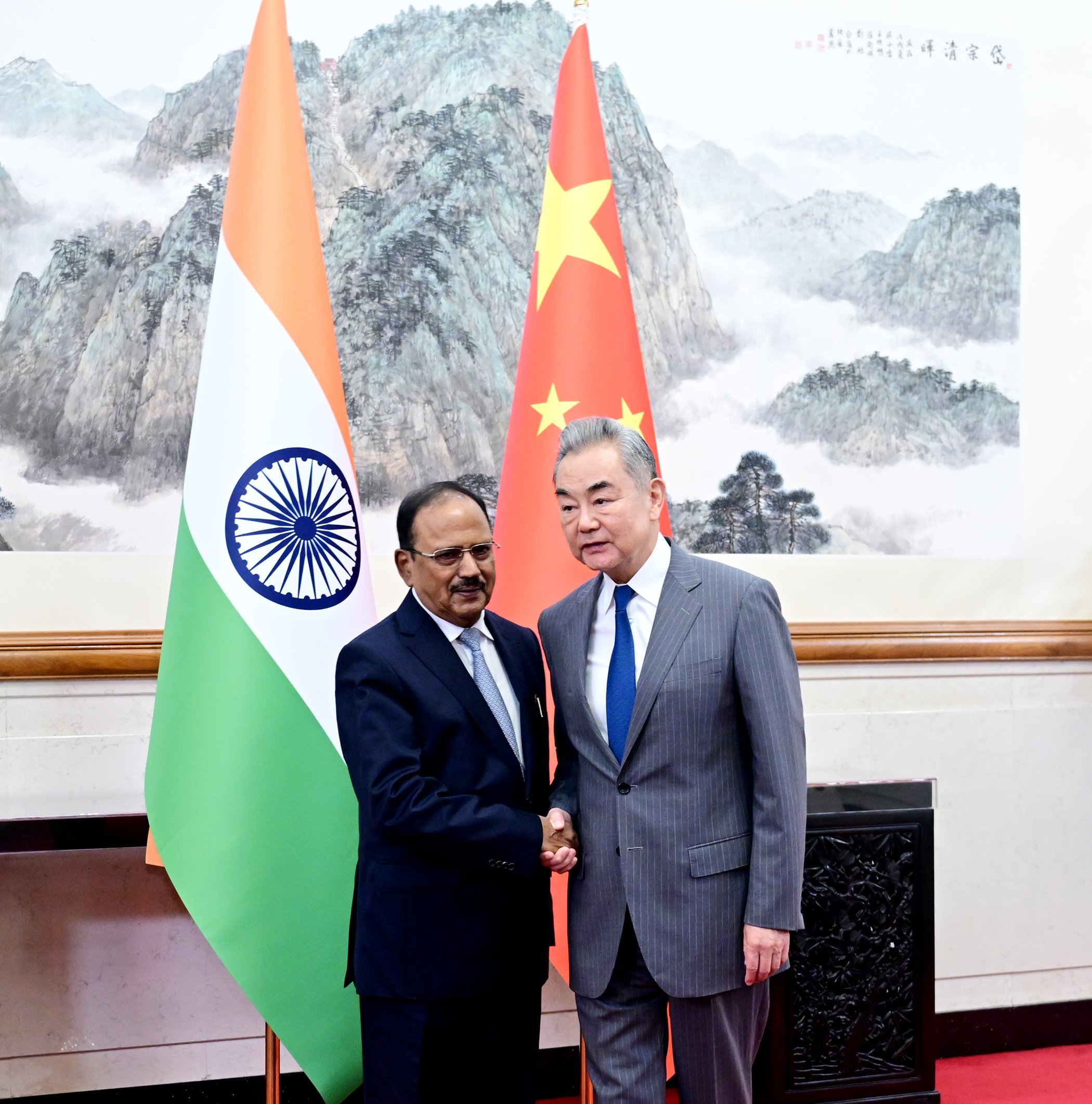
The understanding was reached during the 25th round of talks between the Special Representatives of India and China, held in Beijing on Tuesday. India’s Special Representative and National Security Advisor Ajit Doval and China’s Special Representative Wang Yi held a candid and in-depth exchange of views on the boundary question.
According to the Ministry of External Affairs, both sides reaffirmed that maintaining peace and tranquillity in the border areas is essential for creating conditions conducive to the healthy and steady development of bilateral relations.
The two countries also reiterated their commitment to advancing negotiations on a framework for resolving the boundary question in accordance with the 2005 Agreement on Political Parameters and Guiding Principles for Settlement of the India-China Boundary Question and the understanding reached during subsequent Special Representatives’ talks.
The objective remains to arrive at a fair, reasonable and mutually acceptable settlement of the boundary dispute.
Focus on Early and Substantial Harvest
A key outcome of the latest talks was the decision to advance discussions on an “Early and Substantial Harvest” in the areas of boundary delimitation and border management.
The Expert Group on Boundary Delimitation and the Working Group on Border Management under the Working Mechanism for Consultation and Coordination (WMCC) will take forward these discussions. Their first task will be to finalise their respective Terms of Reference, creating a structured framework for future engagement.
India and China also agreed that situations arising on the ground would be addressed promptly through existing diplomatic and military channels. These include the WMCC, local commander-level meetings and other agreed mechanisms.
The two sides discussed measures to improve their understanding of the LAC in appropriate areas, with the aim of strengthening border management and preventing misunderstandings or miscalculations from escalating into larger tensions.
Additional Military Communication Channels
As part of efforts to strengthen communication, the two countries agreed to establish two additional meeting points for General Level Mechanism/Senior Highest Military Commander meetings.
They also agreed to establish two additional channels of border military hotlines in the Eastern and Middle Sectors. The additional mechanisms are expected to provide the two militaries with more avenues for direct communication during situations requiring immediate clarification or coordination.
Kailash-Manasarovar Yatra and Border Trade
The talks also covered trans-border cooperation. India appreciated China’s efforts to increase the number of batches for the Kailash-Manasarovar Yatra undertaken by Indian pilgrims in the Tibet Autonomous Region.
Both sides welcomed the reopening of three designated border trading points and agreed to strengthen exchanges and cooperation in border trade, pilgrimage and other areas.
The two countries said greater cooperation in these areas would help create an atmosphere of dialogue, peace, consultation and cooperation along the border.
Cooperation on Trans-Border Rivers
India and China further agreed to convene the next meeting of the Expert-Level Mechanism on Trans-border Rivers in September.
Both sides will maintain communication on issues including hydrological data sharing and the renewal of relevant memoranda of understanding. Cooperation on trans-border rivers remains an important component of bilateral engagement due to rivers originating in the Tibetan region and flowing downstream into India and other countries.
The two sides agreed that the 26th round of Special Representatives’ talks will be held in India in 2027, signalling continued engagement on the boundary question and broader border management issues.