English


Government Revises Wheat Output Upwards to Record 112.92 Million Tonnes for 2023-24

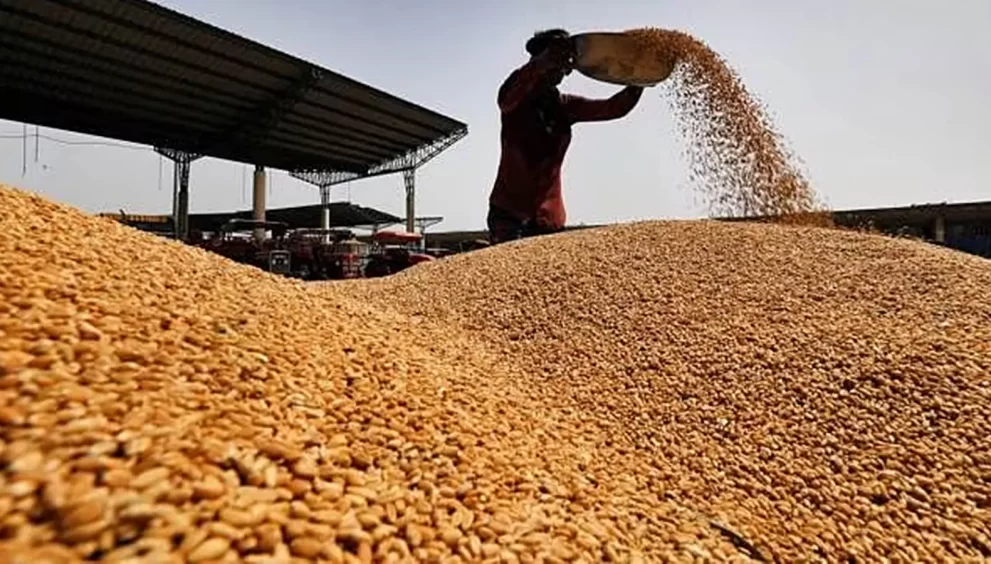
In a significant development, the government has revised upwards the wheat production estimate for the 2023-24 crop year to a record 112.92 million tonnes, marking a notable increase from the previous estimate.
According to the third estimate released by the agriculture ministry, the wheat output for the crop year (July-June) has been revised upwards by 0.91 million tonnes from the second estimate. This latest figure also surpasses the previous record high of 110.55 million tonnes achieved in the 2022-23 crop year.
Wheat, being the main rabi (winter) crop, plays a crucial role in India’s agricultural landscape and food security. The record-high production indicates favorable weather conditions and efficient agricultural practices adopted by farmers across the country.
The agriculture ministry’s announcement underscores the resilience and productivity of India’s agricultural sector, particularly in the face of various challenges and uncertainties.
Moreover, the increased wheat production is expected to contribute positively to the country’s food grain reserves and buffer stocks, ensuring adequate supply and price stability in the domestic market.
Additionally, the government’s proactive procurement efforts have been instrumental in supporting farmers and ensuring remunerative prices for their produce. Over 26 million tonnes of wheat have already been procured by the central government at the minimum support price, providing much-needed income support to farmers.
The upward revision in wheat production bodes well for India’s overall agricultural output and economic growth prospects. It reflects the resilience and adaptability of the farming community, as well as the government’s efforts to promote sustainable agriculture and enhance farmers’ welfare.
As the country continues to navigate through various economic and agricultural challenges, the robust performance of the agricultural sector remains a key driver of India’s overall growth trajectory.
Looking ahead, stakeholders will closely monitor developments in the agricultural sector, including government policies and initiatives aimed at further bolstering farm productivity, rural livelihoods, and food security in the country.