English


India Launches World’s Largest Grain Storage

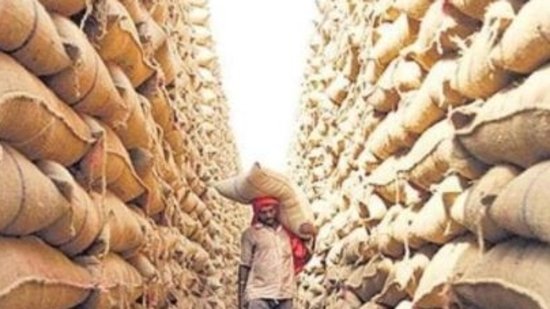
Government Launches Pilot Project for World’s Largest Grain Storage Scheme
In a significant move to enhance decentralized food grain storage capacity, the Government of India has initiated a pilot project under the World’s Largest Grain Storage Plan in the Cooperative Sector. Approved on May 31, 2023, the plan aims to create various agricultural infrastructure at the Primary Agricultural Credit Society (PACS) level. The initiative includes setting up decentralized godowns, custom hiring centers, processing units, sorting and grading facilities, cold storage units, and packhouses. This will be accomplished through the convergence of multiple existing government schemes such as the Agriculture Infrastructure Fund (AIF), Agricultural Marketing Infrastructure Scheme (AMI), and Pradhan Mantri Formalization of Micro Food Processing Enterprises Scheme (PMFME), among others.
The plan is designed to address logistical and distribution challenges by enabling localized grain storage at PACS, thus minimizing long-distance transportation costs and losses. By integrating PACS with agri-marketing and procurement systems, farmers will gain direct access to storage facilities, reducing their dependence on intermediaries. This initiative aims to enhance price realization for farmers, lower transportation expenses, and generate employment in rural regions.
Progress Under the Pilot Project
As part of the pilot phase, 11 godowns have been constructed in 11 PACS across the country, creating a total storage capacity of 9,750 metric tonnes (MT). This marks a significant step toward strengthening the cooperative movement and deepening its reach at the grassroots level.
Strengthening the Cooperative Sector
On February 15, 2023, the government approved a broader plan to reinforce the cooperative movement and expand its reach to rural areas. The plan envisions the establishment of 2 lakh new multipurpose PACS (M-PACS), dairy, and fishery cooperative societies across all panchayats and villages within five years. This will be achieved through the convergence of various existing government schemes such as the Dairy Infrastructure Development Fund (DIDF), National Programme for Dairy Development (NPDD), and PM Matsya Sampada Yojana (PMMSY). The initiative will be supported by institutions like the National Bank for Agricultural and Rural Development (NABARD), the National Dairy Development Board (NDDB), and the National Fisheries Development Board (NFDB), alongside state governments.
Progress in PACS Registration and Computerization
As per the National Cooperative Database, 3,667 new PACS have been registered across the country as of January 27, 2025. Maharashtra alone has seen the registration of 148 new PACS under this plan. In addition, the government has launched a nationwide project for the computerization of functional PACS, with a financial outlay of ₹2,516 crore. This initiative will integrate all operational PACS onto an Enterprise Resource Planning (ERP)-based national software platform, linking them with NABARD through State Cooperative Banks (StCBs) and District Central Cooperative Banks (DCCBs). As of January 27, 2025, 50,455 PACS have been onboarded onto the ERP platform, and proposals for the computerization of 67,930 PACS from 30 states and Union Territories have been sanctioned.
With ₹741.34 crore already disbursed to various states and hardware delivered to 60,382 PACS, the project is on track to significantly modernize India’s agricultural cooperative infrastructure.
The Government’s ambitious efforts to expand storage capacities, digitalize cooperatives, and strengthen grassroots agricultural institutions are expected to have a transformative impact on India’s rural economy, benefiting farmers and reducing post-harvest losses.
For further details, the state-wise list of newly registered PACS is available in the annexure. This announcement was made by Union Minister of Cooperation Shri Amit Shah in a written response in the Rajya Sabha.