English


2025 Economic Reforms Build Future-Ready India

2025 Economic Reforms Pave Way for Future-Ready India
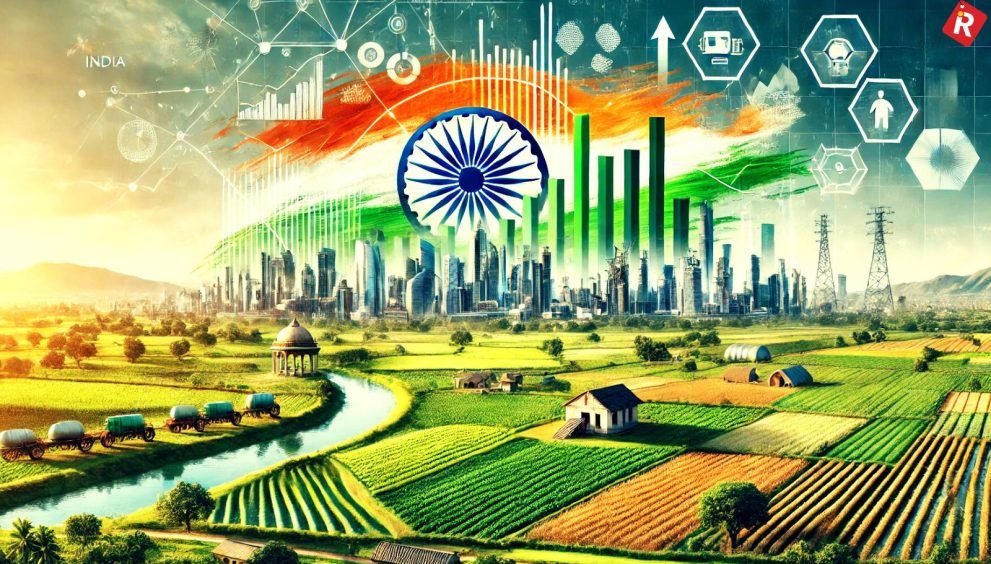
India’s 2025 economic reforms have focused on building a future-ready economy by simplifying systems, boosting growth, enhancing inclusivity, and improving the ease of doing business, according to official reports. The year’s initiatives span taxation, labour, rural employment, MSME development, and export promotion, reflecting a decisive shift toward outcome-driven governance.
Income Tax Reforms:
The New Income Tax Act, 2025, modernizes India’s direct tax framework, simplifying provisions, consolidating compliance, and introducing a unified “Tax Year.” Annual incomes up to ₹12 lakh are now exempt from tax, rising to ₹12.75 lakh for salaried taxpayers under standard deduction, providing relief to millions of middle-class households. Faceless administration, digital-first enforcement, and enhanced dispute-resolution mechanisms strengthen transparency and ease of compliance.
Labour Reforms:
Twenty-nine labour laws were consolidated into four Labour Codes covering wages, industrial relations, social security, and occupational safety. The reforms extend social security and workplace protection to unorganized, gig, and platform workers while promoting simplicity and uniformity across sectors. Women and migrant workers benefit from improved maternity leave, wage security, and safe working conditions.
Rural Employment Reforms:
The Viksit Bharat – Guarantee for Rozgar and Ajeevika Mission (Gramin) Act, 2025, guarantees 125 days of paid employment per rural household, integrates agricultural labor availability, ensures timely wage payments, and focuses on asset creation through climate-resilient and livelihood-enhancing projects. Decentralized Gram Panchayat planning and strengthened administrative capacity aim to improve delivery and outcomes.
Ease of Doing Business and MSME Reforms:
Quality Control Orders and BIS compliance were simplified for micro and small enterprises. MSMEs gained expanded credit support, doubled credit guarantee coverage, and revised thresholds to support growth. Investment and turnover limits were raised for micro, small, and medium enterprises to foster employment generation and entrepreneurship.
GST 2.0 Reforms:
Next-Generation GST simplified taxation to a two-slab structure (5% and 18%), reduced compliance burdens, expanded the taxpayer base to 1.5 crore, and strengthened fiscal sustainability. Rate reductions on essential goods and services improved household affordability, while faster refunds and simpler processes incentivized startups and MSMEs.
Export Promotion Mission:
With a budget outlay of ₹25,060 crore, the Export Promotion Mission integrates financial and non-financial support for MSMEs and first-time exporters, enhancing trade finance, compliance, logistics, and market access. The initiative aims to boost global competitiveness, employment, and inclusive growth.
Trade and Digital Reforms:
Digitization of trade systems, risk-based refunds under GST 2.0, and decentralization of approvals under D-BRAP 2025 have simplified processes and reduced transaction costs. Initiatives like GeM and MSME-SAMBANDH have strengthened MSME participation in government procurement.
Collectively, these reforms reflect a shift from rule-heavy regulation to outcome-based governance, promoting transparency, efficiency, and inclusivity. They are designed to empower citizens, strengthen businesses, support rural livelihoods, and position India as a globally competitive, future-ready economy.