Odisha
Paradip Port Set for Over ₹2,000 Crore Infrastructure Expansion
New mechanisation, connectivity and navigation projects to enhance cargo handling and operational efficiency

AUDIO NEWS
Listen to this Story
Approx. 4 min listen • Natural AI Voice
Speed:

Paradip Port
Paradip Port
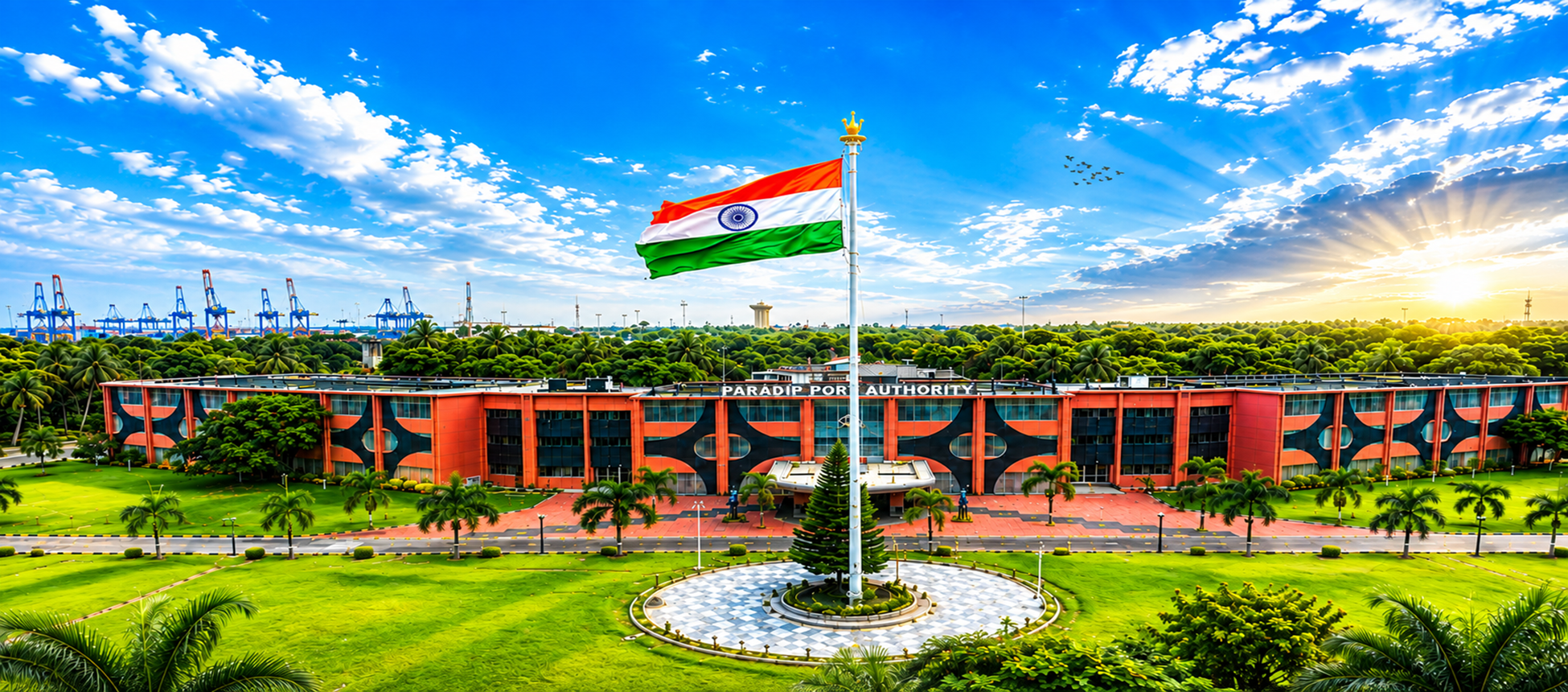
Odisha’s Paradip Port is set for a major infrastructure and capacity expansion with projects worth more than ₹2,000 crore aimed at modernising cargo-handling facilities, improving connectivity and navigation, and enhancing overall operational efficiency.
The Paradip Port Authority (PPA) has signed concession agreements for three major mechanisation projects involving an investment of ₹1,580.36 crore. In addition, Union Minister for Ports, Shipping and Waterways Sarbananda Sonowal inaugurated seven infrastructure projects worth ₹427.80 crore at the port.
The expansion is part of Paradip Port’s long-term plan to achieve 100 per cent berth mechanisation by 2030, compared with the current level of around 80 per cent. The mechanisation projects are expected to improve cargo-handling capacity, reduce vessel turnaround time and bring down logistics costs.
The three mechanisation projects include the 5-million-tonne-per-annum (MTPA) South Quay, with an investment of ₹498.69 crore; the 8 MTPA Multipurpose Berth, costing ₹630.67 crore; and the 10 MTPA Captive CQ-III, involving an investment of ₹451 crore.
The projects have been awarded under the Build-Operate-Transfer (BOT) model to Yogayatan Paradip SQB Terminal Pvt Ltd, Kalinga Bulk Terminal Paradip Pvt Ltd and AMNS Paradip Logistics Pvt Ltd, respectively.
A key development is Paradip Port’s new 18.5-metre deep-draft capability, created through capital dredging at a cost of ₹352 crore. The enhanced draft will allow fully laden Capesize vessels to enter the inner harbour, enabling larger vessels to handle cargo more efficiently and improving economies of scale.
Connectivity around the port is also set to improve with the construction of a 500-metre, three-lane bridge across Atharbanki Creek at a cost of ₹24.89 crore. The bridge includes footpaths and a dedicated pipeline corridor and is expected to ease congestion along a route used by nearly 3,000 trucks every day.
To strengthen navigational safety, the port has commissioned an Advanced Vessel Traffic Management and Information System (VTMIS) at a cost of ₹15.50 crore. Developed in association with IIT Madras’s National Technology Centre for Ports, Waterways and Coasts, the system integrates radar, Artificial Intelligence, Automatic Identification System (AIS), CCTV, oil-spill monitoring and 3D visualisation technologies.
Several other infrastructure projects have also been completed. These include a ₹12.18-crore facelift of the administrative office building, a ₹20-crore piped natural gas network covering 546 residential quarters in Madhuban and a ₹2.10-crore sports hostel.
Union Minister Sarbananda Sonowal said the investments would further strengthen Paradip Port’s position as a major maritime gateway and contribute to the growth of trade, logistics and industry across eastern India. The projects are also expected to generate employment opportunities and support the wider regional economy.
The port has simultaneously stepped up its focus on environmental sustainability. Sonowal planted Paradip Port’s one-millionth tree, marking a major milestone in its green-cover initiative. According to the PPA, nearly one lakh trees have been planted every year over the past four years.
With investments in mechanised berths, deeper navigation channels, improved road connectivity and advanced vessel-management technology, Paradip Port is positioning itself for higher cargo volumes and greater operational efficiency in the years ahead.
About the Author: Sobhana Dash
View ProfileChief Editor — Senior editorial correspondent reporting on state politics, economy, and public infrastructure.
RELATED NEWS
View AllComments (0)
Leave a Comment
No comments yet. Be the first to start the conversation!
TRENDING NEWS
READERS POLL
Will the newly announced ₹50,000 Crore infrastructure projects transform Odisha's industrial landscape by 2030?