
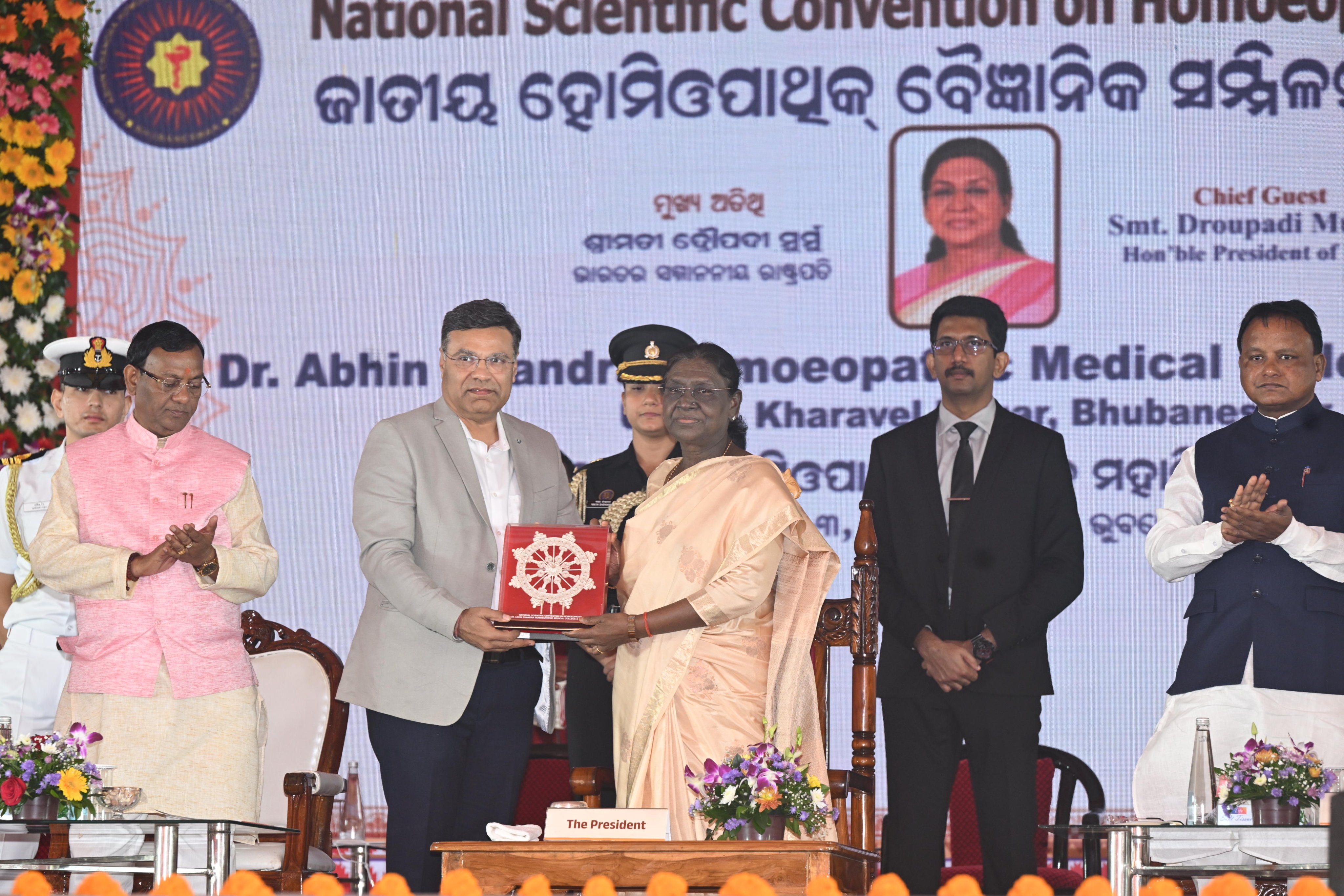
BHUBANESWAR: President Droupadi Murmu on Wednesday emphasised the importance of scientific research, academic excellence and professional accountability in the development of homoeopathy, urging researchers and healthcare professionals to strengthen the evidence base of the medical system.
The President was addressing the National Scientific Convention on Homoeopathy in Bhubaneswar, Odisha, where she highlighted the role of homoeopathy in India's diverse healthcare landscape.
Murmu said homoeopathy had developed a significant institutional presence in the country over the years and had become accessible to people through educational institutions, healthcare facilities and public health networks.
Underlining the importance of scientific integrity, she said the future credibility and academic standing of homoeopathy would depend substantially on the quality of research and clinical evidence generated by the sector.
She called upon research institutions, medical colleges, universities and professional organisations to work together to develop a strong research culture.
The President stressed the need for well-designed clinical studies, systematic documentation, transparent reporting and multicentric research. She also highlighted the importance of systematic reviews, evidence synthesis, pharmacological research and the development of reliable clinical databases.
Emphasising research ethics, Murmu said researchers must demonstrate intellectual honesty by acknowledging limitations, reporting unfavourable findings and allowing scientific evidence to guide conclusions.
Addressing young homoeopathy practitioners, she said the medical profession required more than academic qualifications. It demanded scientific temper, integrity, empathy, intellectual discipline and a commitment to lifelong learning.
She encouraged young professionals to question, investigate and continuously update their knowledge while treating every patient with dignity and compassion.
Referring to India's vision of Viksit Bharat 2047, the President said healthcare and education would remain two important pillars of national development.
She urged institutions, researchers, teachers and healthcare professionals to contribute towards building an accessible, equitable, scientifically responsible and responsive healthcare system.
Murmu expressed confidence that the convention would promote scientific dialogue, institutional partnerships and inspire a new generation of competent and socially responsible healthcare professionals.